
HOSPITAL EXPANSION PERMITTING: MANAGING LARGE-SCALE HEALTHCARE PROJECTS IN D.C.
Expanding a hospital in Washington, D.C. isn’t just construction—it’s open-heart surgery on a living, breathing institution. One wrong move, and the whole system feels it.
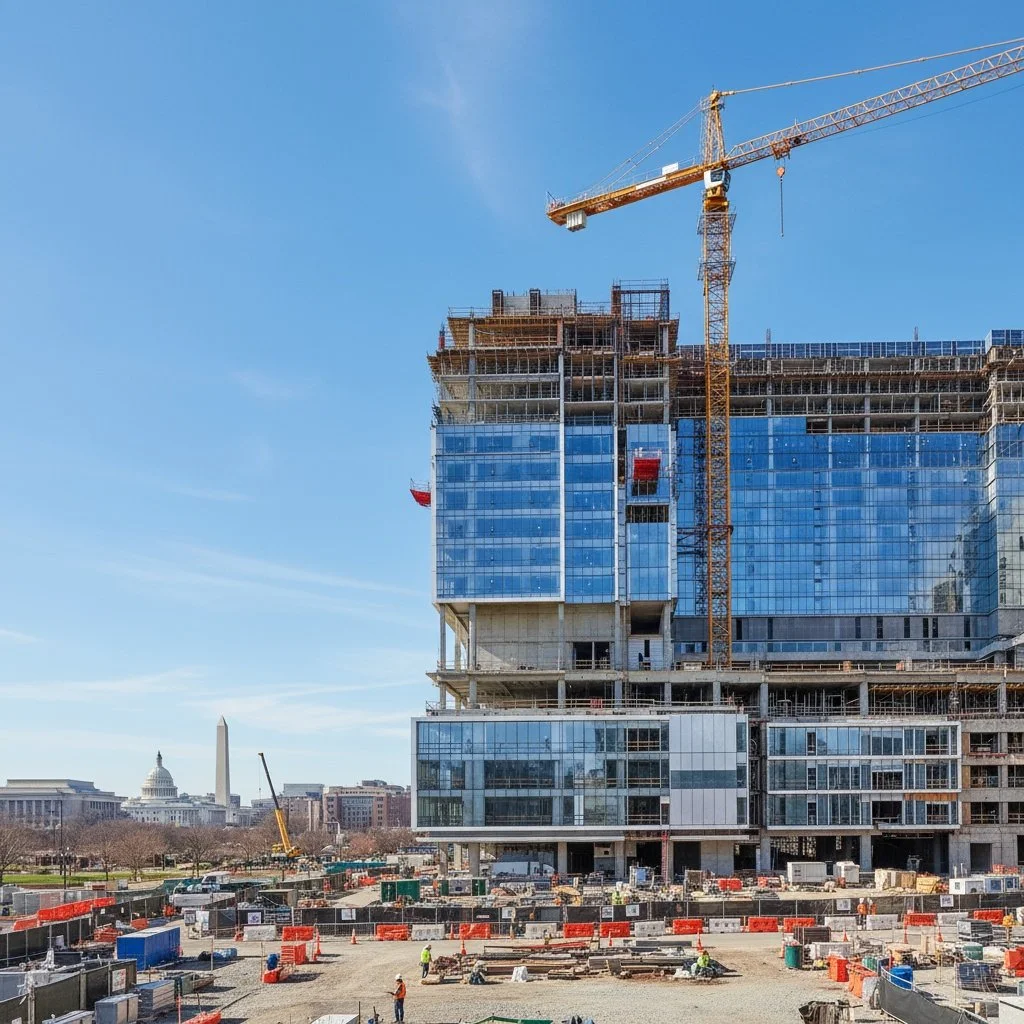
Hospital Expansion
Expanding a Hospital Is Like Rewiring a Plane Mid-Flight
Picture this: you're upgrading the engine, adding new wings, and retrofitting the cabin—all while flying at 30,000 feet. That’s what hospital expansion feels like. With patient care ongoing and lives at stake, there's no room for missteps.
In this post, we’re diving into the complexities of hospital expansion permitting in Washington, D.C. From multi-year phasing strategies to infrastructure coordination and compliance across an active campus, we’ll unpack how to keep your project on track—and your hospital open.
1. Plan for the Long Haul: Mastering Multi-Year Permitting Strategies
Big hospitals mean big timelines—and even bigger permit stacks.
When it comes to hospital expansions in D.C., a multi-year vision isn’t a luxury—it’s a necessity. These projects typically involve phased construction, with separate permits for each stage. This could include:
Early sitework (excavation, demolition)
Core and shell construction
Interior buildouts (per floor or department)
Life-safety and medical systems
D.C.’s Department of Buildings (DOB) requires detailed phasing plans submitted with your Master Permit Application. Expect reviews from zoning, structural, fire, mechanical, and Department of Health (DOH).
Pro Tip: Submit a Comprehensive Phasing Plan with milestone targets to reduce delays between phases.
📊 Stat: Projects with documented phased permitting strategies are 35% more likely to stay on schedule over a 3+ year timeline.
💬 “You have to think five steps ahead—or you’ll get five months behind.” — Anika Rhodes, Healthcare Construction Advisor
2. Surgical Suites & ERs: Compliance at a Higher Standard
Not all hospital rooms are created equal—some require code compliance to the decimal.
Expanding emergency departments or surgical suites adds another layer of complexity. These areas must meet strict guidelines under:
FGI Guidelines for Design and Construction of Hospitals
NFPA 99 & 101 (for medical gases and life safety)
ASHRAE 170 (for ventilation standards)
DOB will coordinate with D.C. Fire & EMS, DOH, and in some cases, federal agencies like CMS for review and inspection.
Pro Tip: Involve a healthcare architect from Day 1—general commercial designers often miss life-critical code requirements.
📊 Stat: Surgical suite permitting requires an average of 3–5 revisions before final approval in D.C.
💬 “Surgical rooms aren’t just about space—they’re about systems. Every duct, outlet, and pressure zone has to work in sync.” — Dr. Sonia Malik, Hospital Facilities Director
3. Beyond the Building: Don’t Overlook Infrastructure Permits
You’ve got beds and labs—but what about helipads and parking decks?
Hospital expansions usually go beyond patient care areas. Think parking structures, utility upgrades, road access, helipads, and generator installations. Each of these requires separate permits and agency coordination.
Key infrastructure elements:
Public Space Permits (for sidewalk closures, curb cuts)
DDOT approvals (for traffic impact)
DOEE permits (for stormwater, air quality)
FAA coordination (for rooftop helipads)
Pro Tip: Appoint a dedicated infrastructure project manager—don’t bury these pieces in your general contractor’s scope.
📊 Stat: Infrastructure permitting accounts for up to 25% of total project delays in D.C. hospital expansions.
💬 “Permits for the ‘extras’ often get the least attention—but they’re the first thing to hold you up at the end.” — James Wu, Permitting Strategist
4. Keep the Doors Open: Construction While Caring for Patients
Hospitals can’t shut down for a renovation—so how do you build without breaking care?
Permitting agencies will scrutinize how construction activity affects ongoing operations. This includes:
Infection control risk assessments (ICRA)
Temporary egress and fire life safety plans
Vibration and noise impact on sensitive equipment
Emergency response coordination
You’ll need to show how each phase will protect patients and staff from construction impacts—while maintaining regulatory compliance.
Pro Tip: Submit a Construction Impact Mitigation Plan as part of your building permit to avoid costly inspection delays.
📊 Stat: 42% of active healthcare facilities in D.C. required plan modifications due to overlooked impact zones.
💬 “You can’t interrupt care to pull a permit. Plan around the patient, always.” — Marie Kemp, Clinical Design Consultant
5. Herding Cats: Coordinating Across a Multi-Building Campus
When your hospital isn’t just one building but an entire city block, communication becomes everything.
Large hospital campuses involve multiple departments, buildings, and sometimes even different owners or operators. That makes coordination with D.C. agencies even trickier. You’ll need:
A Master Campus Plan
Designated permit contacts for each building
Utility and access continuity strategies
Centralized project documentation
Don’t forget: modifications to one part of the campus (like a new skybridge or parking deck) can trigger reevaluation of prior permits.
Pro Tip: Use a permit tracking dashboard with milestone alerts to prevent timeline surprises across buildings.
📊 Stat: Multi-building hospital campuses in D.C. average 11 separate permit sets per major expansion.
💬 “If one piece falls behind, the whole puzzle suffers. Coordination isn’t optional—it’s the job.” — Rachel Lam, Urban Development Planner
Final Thoughts: Build Big, But Build Smart
Hospital expansions in Washington, D.C. are among the most complex projects in the permitting world. With multi-year phasing, advanced infrastructure, patient-first requirements, and massive interdepartmental coordination, there’s no room for guesswork.
Whether you’re adding a surgical tower, upgrading an ER, or building a brand-new wing, success comes down to one thing: planning smarter than the project is big.
Need a trusted permit partner for your hospital expansion?
M.C.G. Permit Consultants has the experience and insight to guide large-scale healthcare projects through every phase of D.C.'s regulatory maze—without disrupting operations.
📞 Phone: 202-729-8272
📧 Email: sayhello@mcgpermits.com
Let’s make your expansion happen—on time, up to code, and with zero surprises.
