WHAT EVERY MEDICAL FACILITIES DIRECTOR SHOULD KNOW ABOUT D.C. PERMITS
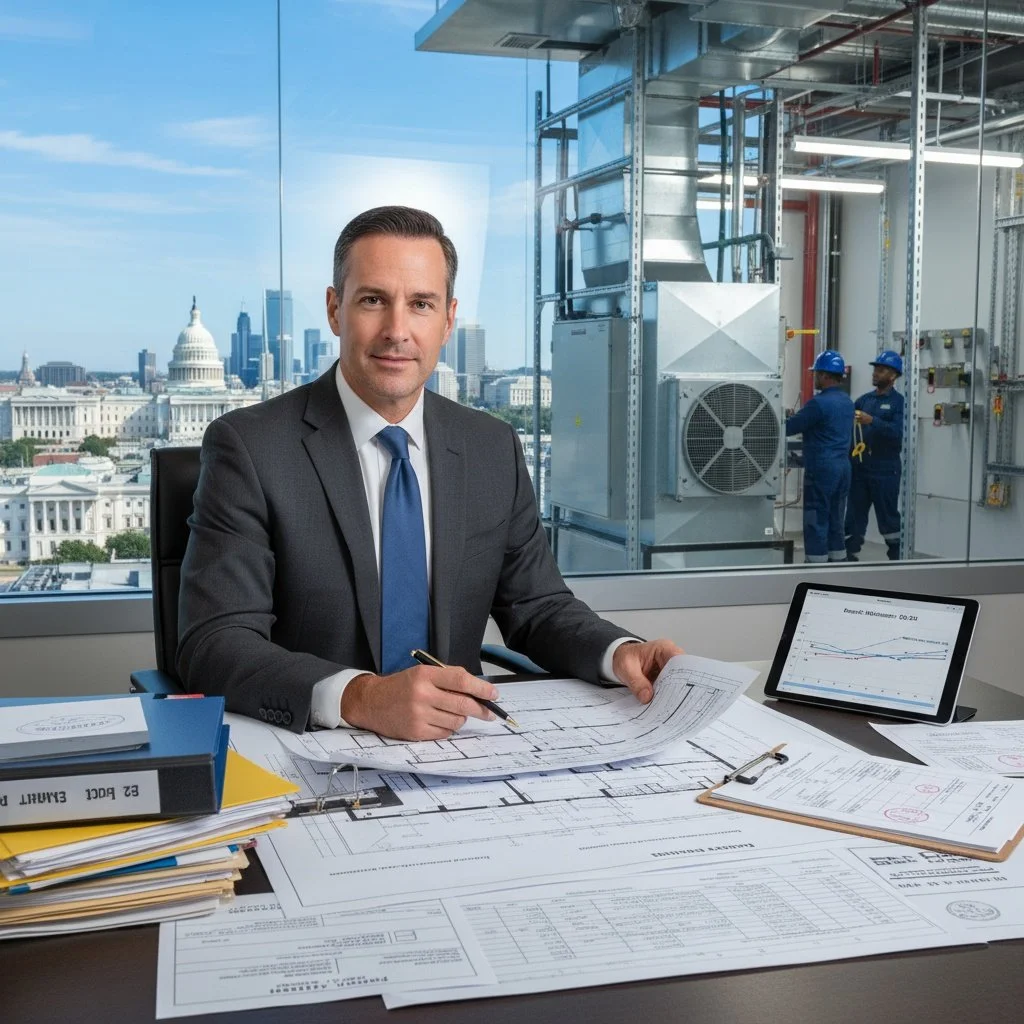
Running a healthcare facility in Washington, D.C. isn’t just about keeping the lights on—it’s about keeping every project, repair, and renovation legally compliant and inspection-ready. And the permit process? That’s your first line of defense.
As a facilities director in Washington, D.C., you manage complex buildings, coordinate maintenance, oversee renovations, and ensure compliance with countless regulations. One critical area that often gets overlooked until it becomes a crisis? Building permits and regulatory compliance.
The difference between a smoothly operating facility and one facing fines, work stoppages, and legal complications often comes down to understanding DC's permitting requirements. This guide breaks down what every facilities director needs to know.
Why Permits Matter: The Real Cost of Violations
Before diving into specifics, let's talk about why this matters.
Scenario 1: The Unpermitted HVAC Replacement Your 20-year-old HVAC system fails on a 95-degree summer day. Your maintenance team wants to replace it immediately. You approve the work. Two weeks later, DC Department of Buildings shows up for an unrelated inspection and discovers the HVAC replacement was done without a permit.
Result: Significant fines, plus requirements to remove and reinstall the system with proper permits, plus potential patient/tenant complaints about downtime.
Scenario 2: The Elevator Certification Lapse Your building has 8 elevators. One expires without renewal. A tenant uses it anyway. Someone gets injured. Now you're facing liability, insurance complications, and potential legal action.
Result: Substantial liability exposure, plus emergency recertification costs, plus reputational damage.
Scenario 3: The Renovation Without Proper Planning You plan a bathroom renovation on the 5th floor. Your contractor starts work without submitting plans to DCRA. Midway through, a building inspector shows up and stops all work.
Result: Extended project delay, contractor disputes, tenant complaints, and emergency permit expediting needs.
These aren't hypothetical scenarios. They happen regularly to facilities directors who underestimate DC's permitting requirements.
The Core Principle: DC Requires Permits for Most Work
Here's the fundamental rule: If work involves structural changes, mechanical systems, electrical systems, plumbing, or occupancy changes, you likely need a permit.
This includes:
HVAC system replacements or major repairs
Electrical panel upgrades or rewiring
Plumbing modifications or replacements
Window replacements (especially in historic districts)
Roof repairs or replacements
Interior renovations or reconfiguration
Fire suppression system work
Elevator maintenance or replacement
Accessibility modifications
Signage installation
What doesn't require permits:
Routine maintenance and repairs (like replacing a faucet or light fixture)
Interior painting (in most cases)
Carpet replacement
Furniture installation
The distinction is important: Maintenance = no permit. Replacement or upgrade = permit required.
The Three Key Agencies You Need to Know
1. DC Department of Buildings (DCRA/DOB)
What they oversee: Building permits, construction, structural work, electrical, plumbing, HVAC, elevators, fire suppression systems, accessibility compliance
Key requirements:
Building permits for most construction work
Elevator certification (annual renewal)
Fire suppression system inspections
Certificate of Occupancy for new occupancies
Electrical and plumbing permits
Timeline: 30-90 days for standard permits (can be expedited)
Contact: DC Department of Buildings | 202-442-4623 | dob.dc.gov
2. DC Department of Health (DOH)
What they oversee: Healthcare facilities, food service, public health compliance
Key requirements (if you manage healthcare facilities):
Healthcare facility licensing
Infection control standards
Medical equipment registration
Emergency preparedness plans
Timeline: 60-120 days for healthcare facility approvals
Contact: DC Department of Health | 202-442-5955 | doh.dc.gov
3. Historic Preservation Review Board (HPRB)
What they oversee: Any work on historic properties (applies to many DC buildings)
Key requirements:
Design review for exterior work
Approval for window replacement, roofing, additions
Interior modifications in some cases
Timeline: 30-60 days for HPRB review
Contact: HPRB | 202-442-8800 | hprb.dc.gov
The Permit Process: What to Expect
Understanding the typical timeline helps you plan better.
Phase 1: Pre-Submission (1-2 weeks)
Scope of work definition
Contractor selection
Plan preparation
Budget approval
Phase 2: Submission (1 day)
Submit complete application
Include all required documents
Pay application fees
Phase 3: Plan Review (30-90 days)
DCRA reviews plans for code compliance
May request clarifications or revisions
You respond to review comments
DCRA approves or denies
Phase 4: Permit Issuance (1 day)
Pay permit fees
Receive permit
Work can begin
Phase 5: Construction & Inspections (varies)
Contractor performs work
DCRA conducts inspections at key phases
Final inspection upon completion
Phase 6: Closeout (1-2 weeks)
Final approval
Certificate of Occupancy (if required)
Permit closure
Total timeline: 45-120 days minimum
Common Mistakes Facilities Directors Make
Mistake #1: Assuming Routine Work Doesn't Need Permits
Reality: Many facilities directors think "it's just maintenance" and skip the permit process. Then an inspector arrives and you're facing fines.
Solution: When in doubt, contact DCRA. A 5-minute phone call beats a compliance violation.
Mistake #2: Not Planning Ahead
Reality: Emergencies happen (HVAC failures, roof leaks, etc.), but many facilities directors wait until the last minute to start the permit process.
Solution: Plan major maintenance and replacements 6-12 months in advance. Budget for permit timelines in your project planning.
Mistake #3: Incomplete Applications
Reality: Submitting incomplete applications causes delays. DCRA requests missing documents, work stops, timelines slip.
Solution: Use a detailed checklist before submission. Verify all required documents are included.
Mistake #4: Ignoring Historic District Requirements
Reality: Many DC buildings are in historic districts. Facilities directors forget HPRB approval is required before DCRA permits.
Solution: Check if your building is historic. If yes, factor HPRB review into your timeline (add 30-60 days).
Mistake #5: Not Planning for Expedited Services
Reality: When emergencies happen, standard permit timelines aren't fast enough. Expedited services may be necessary.
Solution: Have a permit expediter on speed dial for emergencies and compressed timelines.
The Elevator Certification Requirement: A Special Case
Elevator certification deserves special attention because it's a compliance area where facilities directors often struggle.
The requirement: Every elevator in your building must be certified annually by the DC Department of Buildings.
The process:
Schedule inspection with 3rd party inspector
Inspector conducts safety inspection
Inspector submits certification to DCRA
DCRA issues certificate
Certificate must be renewed annually
Common problems:
Missed renewal deadlines
Incomplete inspection reports
Elevator company delays
3rd party inspector coordination issues
The consequence of non-compliance: Elevator shutdown, liability exposure, tenant complaints, potential fines
Pro tip: If you manage multiple elevators (8+), consider a professional elevator certification management service to track renewals and coordinate inspections.
Budget Planning: What to Expect
Permit costs vary significantly based on project scope and complexity. Contact DCRA directly for current fee schedules, or consult with a permit professional for accurate cost estimates on your specific project.
Factors that affect permit costs:
Project scope and complexity
Building size and type
Historic district status (if applicable)
Number of required inspections
Professional services needed
Your Permit Compliance Checklist
Use this checklist to ensure your facility stays compliant:
Quarterly:
Review upcoming maintenance projects
Identify which projects require permits
Begin permit planning for major work
Check elevator certification renewal dates
Annually:
Audit all permits and certifications
Renew elevator certifications
Review building code compliance
Update emergency preparedness plans
Schedule HVAC and fire suppression inspections
Before Any Construction Work:
Verify permit requirements with DCRA
Check if HPRB approval is needed
Prepare complete application package
Budget for permits and professional services
Establish timeline with contractor
Plan for inspections and closeout
After Work Completion:
Schedule final inspection
Obtain Certificate of Occupancy (if required)
File permits with your records
Update building documentation
Communicate completion to tenants/occupants
When to Call a Permit Professional
You don't always need a permit expediter, but certain situations warrant professional help:
Call a permit professional if:
Your project timeline is compressed (less than 60 days)
Your building is historic (HPRB coordination required)
Your project involves multiple agencies (DOH + DCRA)
You've had previous permit issues or violations
Your project is complex (multi-phase, large scope)
You need emergency permitting
You're managing multiple buildings with different requirements
A good permit expediter will:
Prepare complete applications
Coordinate with multiple agencies
Respond to review comments quickly
Expedite approvals when needed
Ensure code compliance
Manage inspections and closeout
Provide timeline certainty
The Bottom Line
Understanding DC's permit requirements isn't glamorous, but it's essential to your job as a facilities director. The difference between a well-managed facility and one facing fines, work stoppages, and liability often comes down to permit compliance.
Key takeaways:
Most work requires permits - When in doubt, ask DCRA
Plan ahead - Permit timelines are 45-120 days minimum
Budget for permits - Include permit costs in project planning
Track elevator certifications - Renew annually, don't let them lapse
Check historic district status - Add 30-60 days if HPRB approval is needed
Use professionals for complex projects - Permit expediters save time and reduce risk
Maintain documentation - Keep all permits and certifications on file
Need Help Navigating DC Permits?
If you're managing a facility in Washington, D.C., and need guidance on permit requirements, compliance, or expediting services, M.C.G. Permit Consultants specializes in helping facilities directors avoid costly violations and accelerate approvals.
We work with property managers, hospital administrators, and facilities directors across DC to ensure compliance and keep projects on schedule.
Get a free permit evaluation:
📞 Call: (202) 729-8272
📧 Email: sayhello@mcghealthcarepermits.com
🌐 Website: www.mcgpermits.com
For healthcare facilities specifically:
🏥 Visit: www.mcghealthcarepermits.com
M.C.G. Permit Consultants has 25+ years of experience helping DC facilities directors navigate building permits, elevator certification, compliance requirements, and emergency permitting. We understand the unique challenges you face and deliver solutions that keep your facility compliant and your projects on schedule.
